


Frost & Flame: King of Avalon
FunPlus International AG
I spent time with Frost & Flame: King of Avalon as a strategy game that works best when I treat it as a long-running world rather than a quick match. Its central appeal is the feeling of building a stronghold, improving an army, and making decisions that matter beyond a single session. The setting gives those familiar strategy ideas a frosty, Arthurian flavor, but the real experience comes from planning upgrades, managing time, and coordinating with other players.
That makes it an interesting choice for a shared household device. One person may enjoy checking progress for a few minutes, while another may want to spend longer planning development or following alliance activity. At the same time, it is not a simple pick-up-and-play board game. Progress is persistent, the game includes in-app purchases, and account boundaries matter. I would recommend approaching it as an individual game that happens to be playable around other people, not as a casual family title where everyone should freely use the same profile.
How the kingdom feels in everyday play
The first thing I noticed is that the game asks me to think in cycles. I start an improvement, prepare or adjust my forces, inspect available objectives, and then return later to see what has changed. That rhythm suits short breaks during the day. I can make a meaningful decision without needing to complete a long battle immediately, although the broader strategy only becomes clear after several visits.
Related News
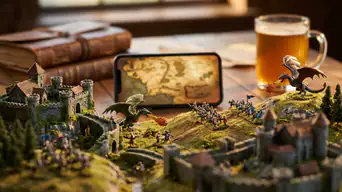
A realistic household example would be someone checking the game during a morning commute, leaving a building upgrade running, and returning in the evening to decide what deserves attention next. On a shared tablet, another household member might open the same game later and see that the account is already committed to a particular plan. That is where the game becomes less suitable as a communal toy: actions affect continuing progress, so casual experimentation can have consequences.
The fantasy setting helps the routine feel more distinctive than a plain city-builder. The idea of ruling in Avalon gives the menus, objectives, and military decisions a consistent identity. Still, the underlying appeal is familiar to anyone who likes mobile kingdom strategy: steady improvement, resource choices, a growing roster of decisions, and the possibility of cooperation or competition beyond the immediate base.
Related News

Why WhatsApp Messenger Still Makes Everyday Communication Feel Easy

Jurassic World: The Game Is the Better Dino Tycoon for Strategic Players

Threads in Real Life: Who Should Join, Lurk, or Leave

How SHEIN Turned Shopping Into an Endless Content Feed

How to Make Fortnite Feel Smarter on Mobile

Should You Switch to Microsoft Outlook on Mobile?
My favorite part was not any single screen. It was the small chain of choices between visits. If I spend attention on one improvement, I may delay another. If I focus too heavily on military preparation, the settlement side can feel neglected. That trade-off gives the game more substance than an idle progress bar, but it also means that players who want instant action may find the pace slow.
A good fit for brief check-ins, with a catch
The game is free to download, which makes trying it easy, but “free” should not be confused with frictionless. In-app purchases range from $0.99 to $149.99 per item, so I would decide in advance whether I am comfortable spending anything. Even without discussing a particular purchase, the presence of that range is important for a shared device: a child, guest, or curious family member should not be treated as if every tap is harmless.
I also found that the game rewards patience more than constant tapping. A player who checks in with a plan can get more from it than someone who repeatedly opens menus without knowing what the next goal is. My practical advice is to choose one immediate priority before each session. For example, decide whether the visit is about strengthening the settlement, preparing forces, or handling social activity. That simple habit reduces aimless spending of resources and makes short sessions feel productive.
Gallery
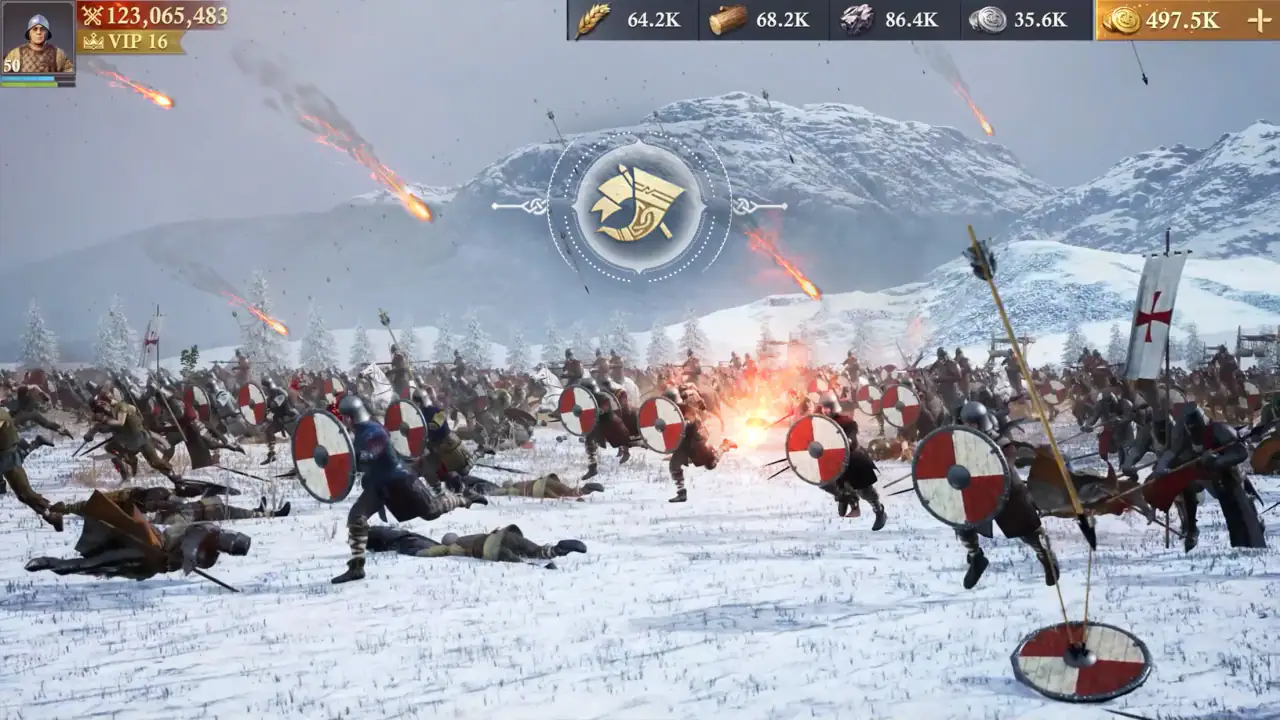
Compared with a traditional turn-based strategy game, this is more persistent and less self-contained. A normal match gives me a clear beginning and end; here, the world continues between visits. Compared with a purely idle game, it asks for more judgment because I am not only collecting rewards. The best comparison is a long-term mobile kingdom game with social and management layers, rather than a compact puzzle or a one-evening tactics title.
What to decide before sharing a device
There are two separate questions: can several people physically use the same phone or tablet, and should they use the same game account? The first is a household convenience question. The second is a progress and trust question. I would keep one player’s account separate from another’s whenever possible, because a developing kingdom represents personal choices and may be connected to purchase decisions or social commitments.
If one device must serve several players, I would establish a simple rule before anyone starts: do not spend resources, begin major actions, or make social decisions for another person without asking. This is not a criticism of the game; it is a consequence of persistent strategy design. A quick arcade game can survive an accidental tap. A continuing kingdom may not feel the same after someone changes its priorities.
I would also avoid using a shared profile as a family experiment for very young children. The age context is Everyone 10+, and that is a useful reminder that the game is aimed at older children and above rather than being a preschool activity. The combination of fantasy conflict, ongoing progression, and optional spending deserves an adult conversation before it becomes a regular shared-device habit.
Building a routine without losing control
The most useful way I found to approach the game was to separate “progress time” from “social time.” During progress time, I focus on the settlement and the next practical improvement. During social time, I look at coordination and whatever cooperation the current situation requires. Mixing both modes can make a short visit feel scattered, especially when I am trying to decide whether a resource should support personal development or a broader group objective.
This distinction is particularly helpful in a household. One person may enjoy the planning side and another may be interested in the communal side. If they share an account, their priorities can conflict without either person doing anything unreasonable. A written household agreement such as “one person manages the account, the other watches or advises” is surprisingly effective. It keeps the game social without turning every session into a negotiation over irreversible choices.
For solo players, the same idea works as a personal checklist. I would begin by checking available tasks, then identify the bottleneck holding back the next improvement. After that, I would review whether my current forces and resources support the immediate objective. This is more efficient than opening every available option and trying to advance everything at once. The game gives enough ongoing activity to tempt me into spreading attention too thin.
Another non-obvious trade-off is the difference between visible progress and useful progress. A shiny new improvement can feel rewarding, but it may not solve the problem that is actually slowing the kingdom down. I learned to ask what the next session will need rather than choosing only what looks most impressive now. That mindset is valuable in this genre because a strong-looking base can still be poorly prepared if its development choices are disconnected.
Coordination is part of the commitment
Strategy games with a social layer can be more motivating than solitary builders, but they also create expectations. If I participate in a group effort, I need to remember that other players may be planning around my activity. That makes the game more engaging, yet it can make it feel less relaxing than a private campaign. Someone looking for a completely independent experience may prefer a conventional offline strategy game instead.
In a household, coordination can be positive when it stays voluntary. A parent and older child might compare plans, discuss which improvement seems sensible, or take turns observing the kingdom. That gives the game a shared topic without requiring both people to make the same decisions. I would be cautious, however, about presenting group participation as an obligation. The game should remain a hobby, not another source of pressure in the home.
I also recommend agreeing on notification habits. I am not inventing a particular notification control here; my point is simply that any persistent game can interrupt daily routines if checked too often. A player who is already prone to opening a phone repeatedly may find the ongoing structure distracting. Setting personal check-in times is a better approach than allowing the game to dictate every spare moment.
The developer, FunPlus International AG, has positioned the title in a well-established mobile strategy space, and the large player response suggests that the format has broad appeal. The game carries an average rating of 4.3 from around 1.2 million ratings, with over 50 million installs. Those figures do not guarantee that every player will enjoy its pace, but they do indicate that the persistent kingdom formula has found a substantial audience.
Age, trust, and spending conversations
The Everyone 10+ rating fits the kind of conversation I would have before installing it for a shared household. I would explain that the game is free to start but includes optional purchases, and I would make clear whose account is being used. That conversation matters more than simply handing over the device, because the game’s long-term structure can make a purchase or account change feel more significant than it first appears.
I would also distinguish between watching and controlling. A younger player may enjoy the fantasy setting and the visible growth of the kingdom, while an adult keeps responsibility for account decisions. An older child who understands persistence and spending may be able to manage more independently, but I would still keep the boundaries explicit. The game is not automatically unsuitable for a family; it simply benefits from clear expectations.
Trust is especially important if more than one person can access the same profile. I would not assume that everyone understands which actions consume resources or affect future plans. Before sharing, I would demonstrate the difference between looking around and committing to an action. That small introduction prevents the most common household frustration: one player opens the game intending only to explore, then another player returns to a changed kingdom.
There is also a social trust issue beyond the home. If the player joins a group or coordinates with other users, the household should remember that those relationships are part of the game experience, not proof that every online contact is trustworthy. I would encourage younger players to keep personal information private and to ask an adult about anything that feels uncomfortable. That is sensible guidance for any connected game, and it is particularly relevant when a title encourages regular coordination.
Where the game succeeds and where I would hesitate
The strongest part of Frost & Flame: King of Avalon is its layered routine. It gives me enough to think about between sessions without demanding that every visit become a full gaming event. The setting adds personality, while the strategy framework supplies a reason to keep returning. Players who enjoy watching a kingdom develop over time will probably understand the appeal quickly.
Its main weakness is the same feature that creates that appeal: persistence. The game can feel like a responsibility when I want a clean, self-contained challenge. Progress takes patience, and the presence of purchases can make the experience less comfortable for anyone who wants a completely predictable free game. The social side can also be a benefit or a burden depending on whether I enjoy coordinating with others.
I would skip it if I want a game that works perfectly in five-minute bursts with no ongoing commitment, a single-player campaign with a definite ending, or a strategy experience without purchase prompts. I would also hesitate to install it on a device used by several people if nobody is willing to respect account boundaries. In those cases, a premium one-time game or a local turn-based title would be a better fit, even if it lacks Avalon’s continuing world.
On the other hand, I would recommend it to someone who likes planning around timers, returning to a developing base, and balancing several types of progress. It is also a reasonable choice for an older child and adult to discuss together, provided the adult sets clear spending and account rules. The game can create useful conversations about priorities and patience, but it should not be presented as a consequence-free shared toy.
The current version is 23.3.0, and it supports devices running Android 7.0 or later. That makes checking device compatibility straightforward for Android users. I would still leave room for the practical realities of a shared device: available storage, battery habits, and whether the phone or tablet is powerful enough for comfortable everyday use. Those are not reasons to reject the game automatically, but they are worth considering before making it the household’s regular strategy title.
My household verdict
After playing it, I see Frost & Flame: King of Avalon as a committed strategy hobby rather than a disposable free download. I like its steady decision-making, its recognizable fantasy identity, and the way a short visit can fit into a busy day. I also think its best qualities appear only when I accept that the kingdom is persistent and that choices should be made deliberately.
For shared use, my recommendation is conditional but positive: let people discuss the game, watch one another play, and compare plans, while keeping accounts and purchase responsibility clearly separated. That approach preserves the social fun without allowing an accidental tap or an impulsive purchase to become a household argument.
FunPlus International AG’s game is free to begin and carries an Everyone 10+ rating, but it asks for more maturity than its simple download price suggests. If you enjoy long-term mobile strategy and can set sensible boundaries, it is worth trying. If you want instant battles, a quiet offline experience, or a game that several people can use interchangeably without affecting one another, I would choose a different kind of strategy game.
FAQs for Frost & Flame: King of Avalon
What is the main objective of Frost & Flame: King of Avalon?
Frost & Flame: King of Avalon is a strategy game where players build and expand their kingdom, train armies, and engage in epic battles to become the ultimate ruler. The game unfolds in a mystical world inspired by Arthurian legend, challenging players to manage resources, form alliances, and conquer enemies.
Is Frost & Flame: King of Avalon free to play?
Yes, Frost & Flame: King of Avalon is free to download and play, but it includes in-app purchases. These purchases can enhance the gaming experience by providing resources, speed-ups, and special items. While optional, some players find these purchases beneficial for advancing more quickly in the game.
What are the system requirements for Frost & Flame: King of Avalon?
Frost & Flame: King of Avalon requires a stable internet connection and is compatible with most modern Android and iOS devices. For the best experience, it's recommended to have a device with at least 2 GB of RAM and the latest operating system updates installed to ensure smooth gameplay.
How important is joining an alliance in Frost & Flame: King of Avalon?
Joining an alliance is crucial for success in Frost & Flame: King of Avalon. Alliances provide players with support, resource sharing, and coordinated attacks against enemies. Being part of a strong alliance can significantly enhance your strategic options and offer protection from rival players.
Can I play Frost & Flame: King of Avalon offline?
No, Frost & Flame: King of Avalon requires an internet connection to play. The game features real-time interaction with other players, which necessitates an online connection. This connectivity allows for dynamic gameplay, including chat, alliances, and live battles.
Pros
- Engaging storyline with captivating quests.
- Impressive graphics and animations.
- Strong community and alliance features.
- Regular updates and new content.
- Strategic gameplay with various tactics.
Cons
- Can be pay-to-win at higher levels.
- Requires a stable internet connection.
- Complex mechanics may overwhelm beginners.
- Long build times without premium currency.
- In-app purchases can be quite expensive.


